 付款。
付款。
Oracle(甲骨文)於紐約證券交易所(NYSE)掛牌交易,是全球領先的雲端運算與數據庫管理軟體巨頭。
受惠於 2025 年 AI 需求大爆發,Oracle 的雲端基礎設施業務強勁增長,帶動市值大幅攀升。2025 年 9 月,其市值一度突破 9,000 億美元(約 70,200 億港元),創下歷史新高;全年平均市值維持在 5,700 億美元(約 44,460 億港元)水平。
在財務表現方面,Oracle 2025 財務年度的總營業額達 664 億美元,純利則達 241 億美元,展現出顯著的盈利增長趨勢。
Oracle 推出的數據庫軟件 Oracle AI Database 26ai 有強大的穩定性和擴展能力,所以全球的各大企業、銀行、大學和政府機構,無一不採用 Oracle 的產品。而本課程將教授 SQL Statement 的編寫。
為了能證明你有專業水準來修改、插入及刪除 Oracle 數據庫內的記錄及核實你對資料定義語言 (Data Definition Language)、資料控制語言 (Data Control Language)、優化器、表格與索引、資料建模和正規化的知識,Oracle 便推出 Oracle AI Database SQL Associate 國際認可考試。
而本課程籌備多時,精心編排,由上堂、溫習、實習、考試研習、做試題至最後考試,均為你度身訂造,作出有系統的編排。務求真正教識你,又令你考試及格。
| 課程名稱: |
Oracle AI Database SQL Associate 認證課程 - 簡稱:SQL Training Course (提供 7x24 實習器材) |
| 課程時數: | 合共 15 小時 (共 5 堂),共 1 科 |
| 適合人士: | 初學 SQL Statement 人士; 或 初學數據庫人士 |
| 授課語言: | 以廣東話為主,輔以英語 |
| 課程筆記: | 本中心導師親自編寫英文為主筆記,而部份英文字附有中文對照 |
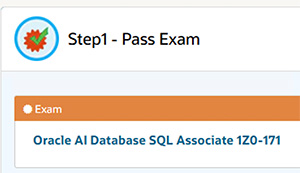
Oracle 已公佈考生必須通過以下 1 個 Oracle Database 相關科目的考試,才可獲發 Oracle AI Database SQL Associate 國際認可證書:
|
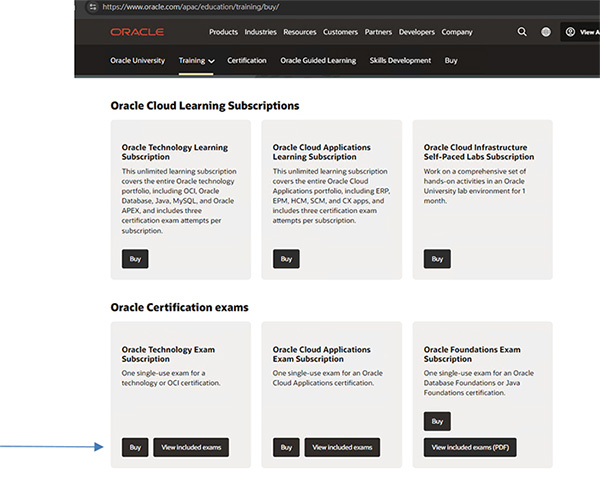
Oracle 已公佈學員必需親自前往 https://www.oracle.com/apac/education/training/buy/ 購買以下 1 個科目的 "Oracle Technology Exam Subscription" 並由 Oracle 親自向您提供考試服務。
考試編號 1Z0-171 (Oracle AI Database SQL Associate) 考試費為 USD $245 學員可於家中上網應考,考試題目由 Oracle 傳送到你要應考的電腦,考試時以電腦作答。所有考試題目均為英文,而大多數的考試題目為選擇題。 考試合格後會收到來自 Oracle 的作實電郵,並進入該電郵內的連結,登入 https://certview.oracle.com 下載您的證書。 考試不合格便可於 5 日後重新報考,但 12 個月內最多只可以考 4 次。欲知道作答時間、題目總數、合格分數等詳細考試資料,可瀏覽本中心網頁"各科考試分數資料"。 |
|
課程名稱:Oracle AI Database SQL Associate 認證課程 - 簡稱:SQL Training Course (提供 7x24 實習器材) |
Relational Database Concepts
- Explain the theoretical and physical aspects of a relational database
- Describe how to relate clauses in SQL Select Statement to Components of an ERD
- Describe the relationship between a database and SQL
- Retrieving Data using the SQL SELECT Statement and Restricting and Sorting Data
Demonstrate how to use column aliases
- Describe using The SQL SELECT statement
- Apply knowledge of how to use the concatenation operator, literal character strings, alternative quote operator, and the DISTINCT keyword
- Calculate output using Arithmetic expressions and NULL values in the SELECT statement
- Demonstrate how to use rules of precedence for operators in an expression
- Identify how to limit rows returned in a SQL statement
- Recognize how to use Substitution Variables
- Describe using the DEFINE and VERIFY commands
- Utilize concepts to sort data
Using Functions
- Apply character functions to manipulate strings in SELECT and WHERE clauses
- Show how to use arithmetic with date data
- Use the ROUND, TRUNC and MOD functions
- Use DATE functions
- Apply the NVL, NULLIF, and COALESCE functions to data
- Explain implicit and explicit data type conversion
- Use the TO_CHAR, TO_NUMBER, and TO_DATE conversion functions
- Describe nesting multiple functions
- Show restricting group results
- Explain creating groups of data and using group functions
Displaying Data from Multiple Tables
- Use SELF-JOINS
- Use various types of joins
- Use NON EQUIJOINS
- Use OUTER joins
- Show understanding of using CARTESIAN PRODUCTS
Using Subqueries to Solve Queries
- Use single row subqueries
- Use multiple row subqueries
- Show how to update and delete rows using correlated subqueries
Using SET Operators
- Demonstrate matching the SELECT statements
- Use the ORDER BY clause in set operations
- Use the INTERSECT, MINUS, UNION and UNION ALL operators
Managing Tables using DML statements
- Apply managing database transactions and controlling transactions
- Execute Insert, Update and Delete operations
- Execute multi table Inserts and Merge statements
Managing Indexes Synonyms and Sequences
- Manage indexes
- Manage synonyms
- Manage sequences
Use DDL to manage tables and their relationships
- Describe working with tables
- Describe working with columns and data types
- Use CREATE TABLE statements
- Demonstrate dropping columns and setting column UNUSED
- Explain the TRUNCATE TABLE statement
- Create and use temporary tables
- Create and use external tables
- Apply how to manage constraints
- Explain managing views
Controlling User Access
- Contrast system privileges and object privileges
- Apply granting privileges on tables
- Demonstrate how to grant privileges and create roles
Managing Objects with Data Dictionary Views and Data in Different Time Zones
- Use data dictionary views
- Use CURRENT_DATE,CURRENT_TIMESTAMP,and LOCALTIMESTAMP
- Explain how to use the INTERVAL data types